- Get link
- X
- Other Apps
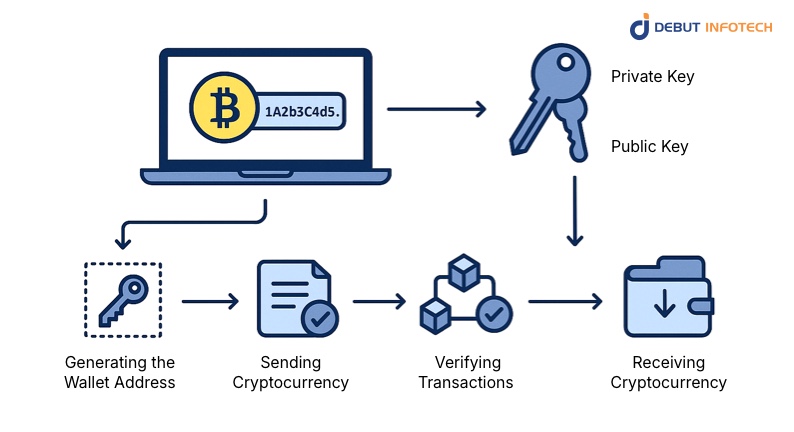
A crypto wallet does not hold any coins inside it. Instead, it stores secret digital keys that prove you own your coins out on the network. Without these keys, you cannot send, spend, or move any of your money.
What is a crypto wallet and how does it store your keys?
Think of a regular leather wallet in your pocket. It holds physical paper cash. A crypto wallet is very different because it is empty of coins. Every coin lives permanently on the shared public ledger, which people call a Blockchain. Your wallet simply holds two long strings of code: a public key and a private key.
In 2009, when the first digital currency launched, early users had to run code on desktop computers just to manage these pairs of keys. Today, a wallet can be an app on your phone, a program on your computer, or a small USB device. It tracks your balance by looking up your public address on the network and showing you the total.
Public keys versus private keys
The easiest way to understand your wallet is to look at your home mailbox. Anyone can find your street address and drop an envelope through the slot. That is your public key, also called your public address. You can share it with friends, family, or an online shop so they can send you funds.
Your private key is the metal key that unlocks the back of the mailbox. Only you have it. If someone else copies your private key, they can open the box and take everything inside. This is why you must never show your private key to anyone online, no matter who they claim to be.
Hot wallets versus cold wallets
Not all wallets store your keys the same way. The main difference comes down to whether the wallet connects to the internet or stays offline.
- Hot wallets: These run as free apps on your phone or web browser. They are easy to use for quick trades, but they face risks from online hackers, phone malware, and fake websites.
- Cold wallets: These are physical pieces of hardware that look like thumb drives. Popular makers include Ledger and Trezor. They keep your private keys completely offline, which makes them much safer for long term savings.
- Paper wallets: Some people print their keys on a sheet of paper and lock it in a fireproof safe. It costs nothing, but paper can tear, fade, or burn.
Most beginners start with a hot wallet app because it takes two minutes to set up. But keeping large amounts of Cryptocurrency on an app connected to the web is risky. If your phone gets stolen or infected, your balance can vanish fast.
What is a recovery phrase and why does it matter?
When you set up any self-custodial wallet, the app will give you 12 or 24 random words. This list is your recovery phrase, often called a seed phrase. It looks like simple words: apple, river, cloud, hammer, stone, bird. These words are just your private key written in plain English so humans can write it down without making typos.
If you drop your phone in the ocean, your coins are not lost. You can buy a new phone, download the same wallet app, type those 12 words in the exact same order, and your full balance comes back instantly. But if someone takes a photo of your paper note, they can use those words on their own phone and steal every cent. Real customer support agents will never ask for your seed phrase.
How to set up your first crypto wallet safely
Setting up your wallet takes only a few minutes, but doing it safely requires careful habits. First, download your wallet app only from the official website of the maker, never from an unverified link or an email. Scammers run fake ads in search engines that point to copycat apps designed to steal your money.
Once you install the app, grab a pen and a piece of paper. Write down your secret phrase with clean handwriting. Store that paper in a private, dry spot away from house guests. Never save those words in a screenshot, an email draft, or cloud storage. If you keep your keys safe on paper, you stay in full control of your digital money.
Comments
Post a Comment